
its written by monica
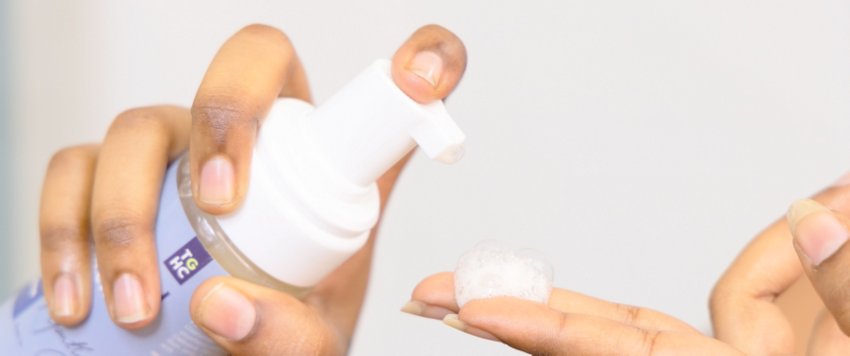
How to choose the right strength, use it without wrecking your skin barrier, and avoid the mistakes that keep acne sufferers frustrated
The short answer: There is no single ‘best’ Benzoyl Peroxide cleanser
If you ask me which benzoyl peroxide cleanser is the best, my answer is simple: there is no single product that is best for everybody. The better question is, ‘Which benzoyl peroxide cleanser is best suited to this person’s skin, acne, tolerance and routine?’ A luxury product can disappoint one person while an inexpensive over-the-counter cleanser works beautifully for another. What matters is compatibility, formulation, strength, correct use and consistency.
My guiding principle is this: put a round peg in a round hole. Acne treatment should be matched to the person—not chosen because a bottle has the highest percentage or the most impressive marketing.
Why Benzoyl Peroxide Is Worth Considering
Benzoyl peroxide is a well-established acne treatment. It helps reduce acne-causing bacteria and is available in washes, gels, creams and combination treatments. The American Academy of Dermatology includes topical benzoyl peroxide among strongly recommended acne treatments. It is particularly useful as part of a broader acne plan, because acne has more than one contributing pathway.
But effective does not mean aggressive. One of the biggest mistakes I see is the belief that if a product burns, stings, peels the skin or comes in a higher percentage, it must be working better. That mindset can turn a useful acne active into an irritation problem.
The Biggest Mistake: Thinking 10% Must Be Better
In my experience, people often reach for the strongest product because they want faster results. I made this mistake myself. Years ago, during my own long acne journey, I was given Oxy10 and used a 10% benzoyl peroxide cleanser and cream together, morning and night. My skin became extremely tight, dry, flaky and itchy. I developed a rash-like red appearance and had to stop.
Looking back, the lesson is obvious: I gave my skin a heavy shock. I was using a high concentration, more than one benzoyl peroxide product and a high frequency from the start.
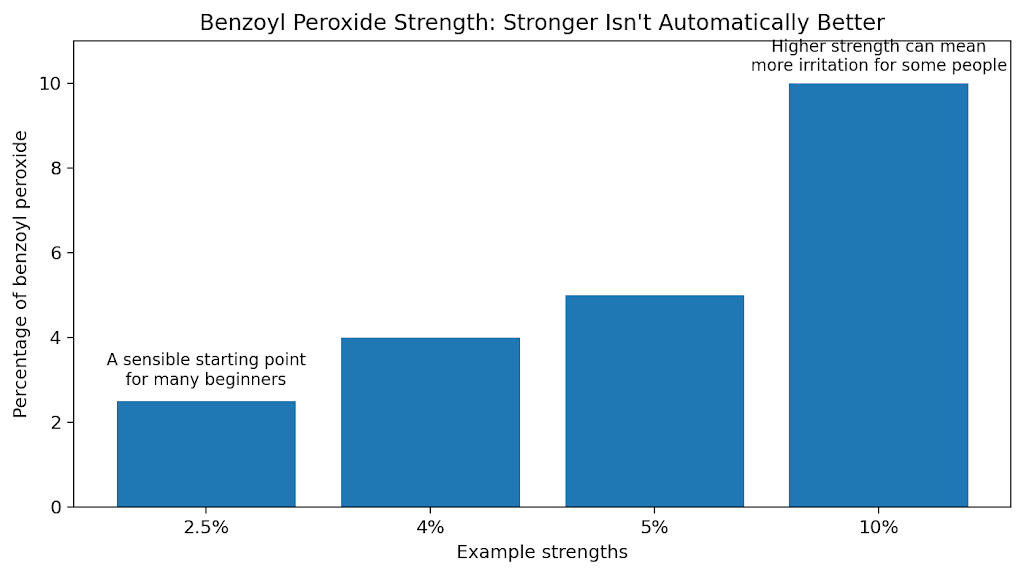
Clinical evidence supports the idea that more is not automatically better. A clinical comparison of 2.5%, 5% and 10% benzoyl peroxide found 2.5% comparable to the higher concentrations for reducing inflammatory lesions, while irritation-related effects were more frequent with 10%. A later review similarly concluded that 2.5%, 5% and 10% can have comparable efficacy, with higher concentrations more likely to cause irritant dermatitis.
So Which Strength Should You Start With?
For someone new to benzoyl peroxide, my preference is to start low—typically 2.5%—and follow the product’s label. The American Academy of Dermatology also advises starting with 2.5% to help reduce dryness, irritation and burning.
That does not mean 4%, 5% or 10% products are ‘bad.’ It means the highest strength should not automatically become the first choice simply because the number is bigger. The right strength depends on the formulation, the area being treated, the person’s skin tolerance and the acne being treated.
A Crucial Correction About Contact Time
Benzoyl peroxide washes are commonly used as short-contact products, and the exact contact time should follow the specific product label. For example, PanOxyl’s 10% Acne Foaming Wash instructs users to massage the wash for 1–2 minutes before rinsing.
So I do not recommend treating a medicated wash like ordinary soap: apply it and immediately rinse it away. At the same time, do not assume that leaving every benzoyl peroxide wash on for longer is better. More contact is not automatically more effective and can increase irritation. Always follow the instructions for the particular product you purchased.
My Simple Beginner Routine
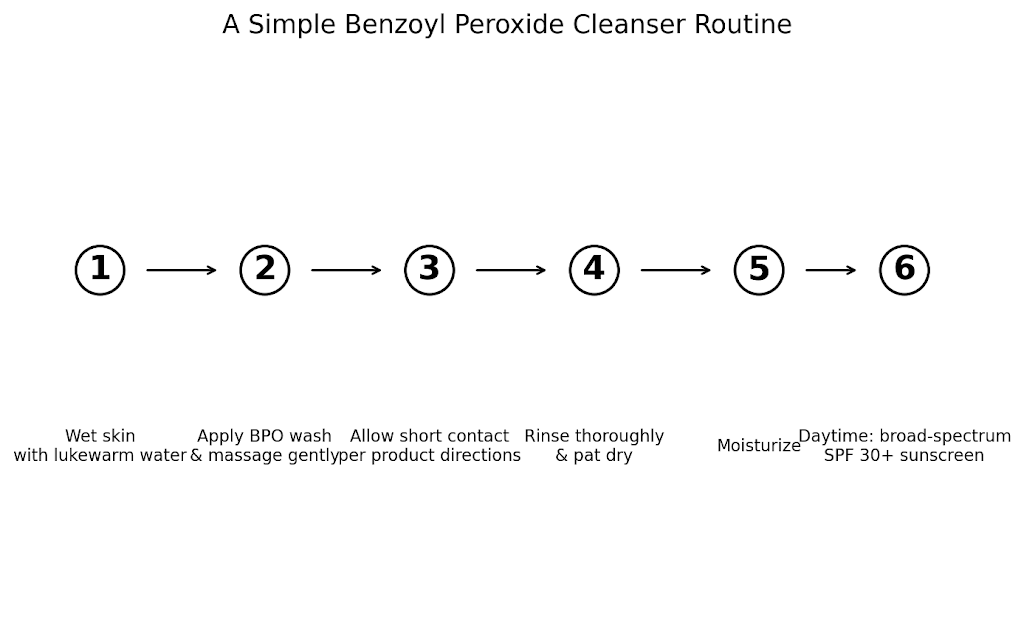
Step 1 — Wet the skin with lukewarm water.
Step 2 — Gently apply the benzoyl peroxide cleanser; do not scrub.
Step 3 — Allow the product its label-directed contact time. For PanOxyl’s 10% foaming wash, the manufacturer’s directions say 1–2 minutes.
Step 4 — Rinse thoroughly and pat dry with a clean towel.
Step 5 — Apply a gentle, non-comedogenic moisturizer. This is not an optional luxury; moisturization can help acne patients tolerate drying acne treatments.
Step 6 — In the daytime, finish with broad-spectrum sunscreen, ideally SPF 30 or higher and water-resistant when appropriate.
For frequency, my practical approach for a beginner is to start cautiously—such as every other day or a few times a week if the skin is easily irritated—and increase only if the skin is tolerating it well and the product label permits. If your clinician has given you a specific schedule, follow that instead.
What Should You Pair With It?
A benzoyl peroxide cleanser should not be treated as the entire acne routine. My preferred supporting ingredients are barrier-friendly and soothing ingredients such as ceramides, hyaluronic acid and niacinamide, provided the overall formula suits the person’s skin.
Be careful about piling on multiple strong acne actives at once. Benzoyl peroxide can be used in combination with other evidence-based acne treatments, including topical retinoids, but the combination and schedule should be individualized—especially if irritation is already present.
If the skin becomes very dry, patchy, burning, persistently red or uncomfortable, reduce frequency or stop and seek professional advice rather than trying to ‘push through’ the irritation.
Moisturizer Is Part of the Acne Routine
One of the strangest acne myths is that moisturizing will make oily or acne-prone skin worse. In reality, dermatologists often recommend moisturizer alongside drying acne treatments such as benzoyl peroxide. The American Academy of Dermatology notes that moisturizer can help skin tolerate these treatments, and recommends looking for oil-free and non-comedogenic options.
This became especially clear to me while helping clients: when the treatment is effective but the barrier is being overwhelmed, the person may become so uncomfortable that they stop treatment—or start changing products constantly. A routine that the skin can tolerate is far more useful than a theoretically powerful routine that someone cannot stick with.
A Real Client Case: When ‘More’ Wasn’t Better
One client I worked with was a caterer with severe acne. She had whiteheads, blackheads, pustules, nodules, cysts and significant post-inflammatory hyperpigmentation. Her skin was painful, and she told me she had been using whatever cleanser or skincare product she could find.
I recommended benzoyl peroxide at 5%, but she could not find that strength and bought 10% instead. She then used it twice a day. The acne improved considerably, but her skin became very dry and peeled heavily. She initially thought the peeling was acceptable because she had very oily skin.
I advised her to discontinue the 10% product and switch to 2.5%, use it at night initially, and support the skin with a ceramide-based moisturizer. I monitored her progress closely. The following month, the improvement was significant: the acne was settling, her skin was much more comfortable, and she was pleased that she did not need an excessive number of products.
That case reinforced something I learned from my own acne journey: the goal is not to make the skin suffer. The goal is to find a treatment the skin can tolerate consistently.
Three Benzoyl Peroxide Products I Have Recommended
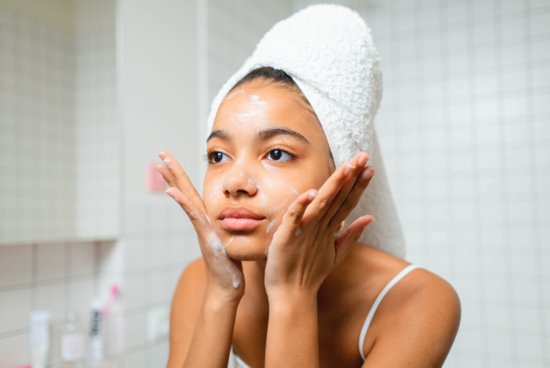
I do not believe in declaring one universal winner. These are examples of products I have personally used or recommended, matched to different needs. Always check the current product label in your country because formulations and availability can change.
PanOxyl Acne Foaming Wash — 10% benzoyl peroxide
A high-strength wash for face and body. The manufacturer’s current directions say to massage for 1–2 minutes, rinse thoroughly and use once daily, increasing only if needed or directed by a dermatologist. Because 10% is strong, I would not use the percentage alone as a reason to call it ‘best.’ Official product information
CeraVe Acne Foaming Cream Cleanser — 4% benzoyl peroxide
A cream-based benzoyl peroxide cleanser designed with barrier-supporting ingredients. CeraVe lists three essential ceramides and describes this formula as a gentler cream-based option. Official product information
Important correction: La Roche-Posay Effaclar Medicated Gel Cleanser
This is NOT a benzoyl peroxide cleanser. The current U.S. product is a 2% salicylic acid cleanser with lipo-hydroxy acid. It can be a useful acne-cleansing alternative for some people, but it should not be listed as a benzoyl peroxide product. Official product information
The Fabric Warning You Should Not Ignore
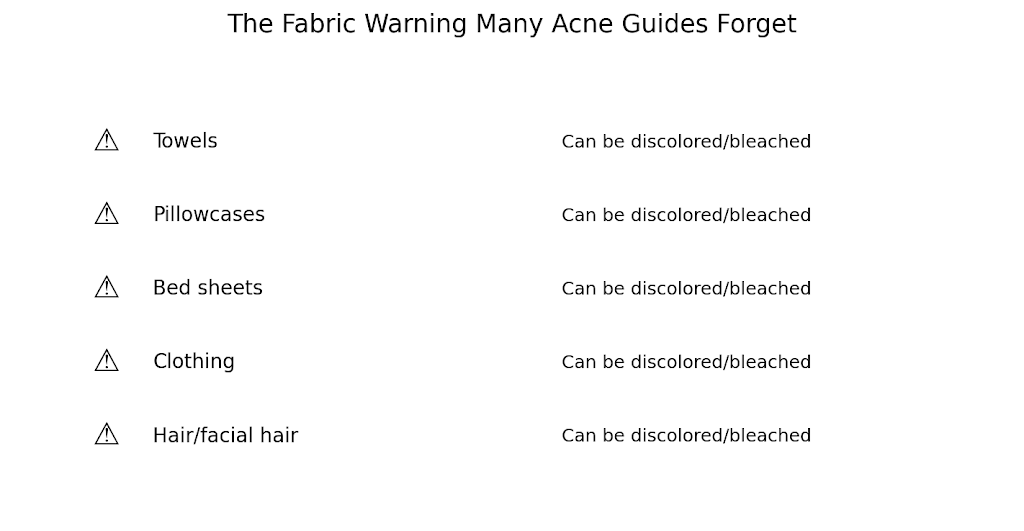
Benzoyl peroxide can bleach or discolor towels, clothing, pillowcases and bedding. This is one of the practical warnings I wish more product reviews emphasized.
During my own experience, I would now protect pillowcases and bedding rather than discovering the hard way that a medicated acne product has permanently discolored fabric. The safest approach is to keep the product away from fabrics you care about, rinse thoroughly, wash your hands after use, and follow the product’s storage and handling directions.
Who May Benefit—and Who Needs Extra Caution?
Benzoyl peroxide is commonly used for acne in adolescents and adults, and can be useful for mild-to-moderate acne, including inflammatory lesions. However, people with painful deep nodules or cysts, extensive acne, significant scarring, or acne that is not improving with an appropriate routine may need a dermatologist rather than simply a stronger wash.
If your skin is already severely irritated, broken, inflamed or reacting to products, do not automatically add benzoyl peroxide. People with conditions such as eczema or rosacea, or anyone who suspects an allergy, should get individualized professional advice before using an irritating acne active.
The Myths I Want You to Forget
- Myth: ‘10% works better because it is stronger.’ Evidence shows lower concentrations can be similarly effective for inflammatory acne, while higher concentrations may cause more irritation.
- Myth: ‘If it burns, it is working.’ Burning, significant redness, itching or peeling is a reason to reassess the routine—not a badge of effectiveness.
- Myth: ‘Drying the skin out clears acne.’ Over-drying can compromise comfort and treatment adherence; dermatologists often recommend moisturizer alongside drying acne treatments.
- Myth: ‘Acne clears overnight.’ Acne treatment takes time. Consistency matters more than repeatedly escalating products.
- Myth: ‘A benzoyl peroxide wash is just soap.’ It is a medicated acne treatment wash, so its label directions—including contact time—matter.
When to See a Dermatologist
If you have painful nodules or cysts, significant scarring, widespread or persistent acne, severe irritation, suspected allergy, or acne that is not improving despite consistent appropriate treatment, seek professional evaluation. A dermatologist can determine whether you need a different active, combination therapy or prescription treatment.
My Bottom Line
If you remember only one thing from this article, remember this: start with the least strength that makes sense for you—often 2.5%—and follow the package directions.
Do not choose a benzoyl peroxide cleanser because it is the strongest. Choose it because it fits your skin, your acne, the area you are treating and the routine you can use consistently. If you have body or back acne, look for a product whose label specifically supports that use. If you have sensitive skin, look for a well-tolerated formulation and get professional advice when appropriate.
Put a round peg in a round hole. Follow the science.
Sources & Further Reading
- American Academy of Dermatology — Acne: Diagnosis and treatment — Source — Evidence-based overview of benzoyl peroxide, combination treatment, irritation and sunscreen.
- American Academy of Dermatology — Adult acne treatment — Source — Notes that 2.5% is a sensible starting concentration for many people to reduce irritation.
- American Academy of Dermatology — Moisturizer and acne — Source — Explains why moisturizer can help people tolerate benzoyl peroxide and other drying acne treatments.
- PubMed — Comparing 2.5%, 5%, and 10% benzoyl peroxide — Source — Clinical trial comparing concentrations in inflammatory acne.
- PubMed — Review of benzoyl peroxide efficacy and tolerability — Source — Review reporting comparable efficacy across 2.5%, 5% and 10%, with more irritant dermatitis at higher concentrations.
- PanOxyl — Acne Foaming Wash 10% — Source — Current manufacturer directions and product details.
- CeraVe — Benzoyl peroxide products — Source — Current manufacturer information for 4% and 10% benzoyl peroxide cleansers.
- La Roche-Posay — Effaclar Medicated Gel Cleanser — Source — Current product information confirming this cleanser contains 2% salicylic acid, not benzoyl peroxide.