
its written by monica

Workers must know of heat, sweat, friction, pressure and acne mechanica
Your job may be demanding, hot, sweaty and physically exhausting—but does your uniform or protective equipment actually cause acne? The short answer is: it can contribute to or aggravate acne in some people, but your uniform does not automatically “give” you acne.
If you already have acne-prone skin, spending 8–12 hours wearing a tight helmet, face mask, head covering, goggles, straps, protective clothing or other equipment can create heat, sweat, friction, pressure and occlusion that make breakouts worse. This is one setting in which acne mechanica may occur.
My experience: when work equipment is part of the problem
The baker with persistent forehead breakouts
One client was a baker who wore scarves and a head covering with a scrunchie-like fastening that gripped tightly around her forehead. Her workplace was hot and she sweated heavily. She already had acne-prone skin, and her breakouts were concentrated around the forehead and hairline.
The important question was not simply, “Did the uniform cause her acne?” It was: how was her working equipment interacting with her skin? Heat and sweat were being trapped while pressure and friction were repeatedly applied to the same area. The pattern was consistent with the mechanisms involved in acne mechanica.
Mask-related breakouts during COVID-19
During the COVID-19 pandemic, I had dozens of clients contact me about irritation and breakouts associated with prolonged mask use. Some were mild; others were severe. Some had itching or burning around the nose, cheeks, mouth and chin. Some developed bumps or blister-like lesions, which meant conditions other than ordinary acne also had to be considered.
One client had acne-prone skin and hyperpigmentation around her cheek area. She also worked around heat and wore a tight mask consistently. Looking at heat, sweat, pressure, friction, prolonged wear and her existing acne tendency gave us a much clearer picture.
“This wasn’t simply a case of saying, “The mask caused your acne.” It was about understanding how the mask was interacting with her skin.”
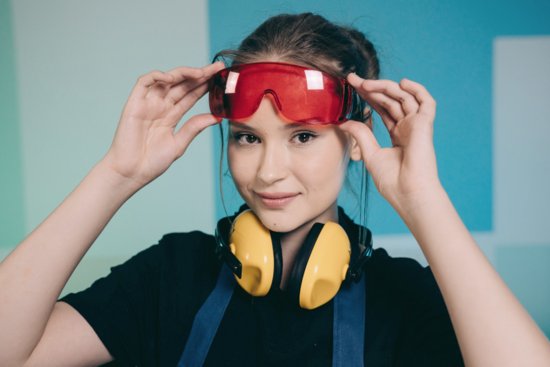
So, can work uniforms and protective gear cause acne?
A common misconception is that the uniform itself causes acne. It doesn’t necessarily. Many people wear helmets, masks, uniforms, head coverings, goggles and other protective equipment every day without developing acne.
A more accurate explanation is: work equipment can aggravate acne in someone who is susceptible, particularly when it creates prolonged heat, sweat, pressure, friction or occlusion. Two people can therefore wear the same equipment in the same workplace and have very different skin responses.
What exactly is acne mechanica?
Acne mechanica is an acne pattern or aggravation associated with mechanical factors such as friction, pressure, heat and occlusion. During a long shift, equipment can remain against the skin while body temperature rises and sweating increases.
It can occur around the forehead, hairline, cheeks, chin, jawline and areas exposed to straps, helmets, masks, goggles or other equipment. But location alone does not prove the diagnosis.
Is it really acne?
Not every bump, rash or irritation underneath protective equipment is acne. Depending on the appearance and symptoms, possibilities can include:
- Acne mechanica
- Acne vulgaris aggravated by equipment
- Folliculitis
- Irritant or allergic contact dermatitis
- Heat-related irritation
- Another inflammatory skin condition
When I assess someone’s situation, I ask where the breakout is, what the pattern is, when it began, what the lesions look and feel like, whether it improves away from work, and what else is being used on the skin. This helps determine whether the work environment is likely contributing or whether another condition needs professional assessment.
“Acne treatment is science.”
7 practical ways to reduce work-related acne aggravation
1. Keep your work equipment clean
Equipment that repeatedly touches your skin can accumulate sweat, oil and other substances. Clean it according to the manufacturer’s instructions and workplace safety or infection-control requirements.
2. Pay attention to fit—but never compromise safety
If equipment is unnecessarily tight, it can increase pressure and friction. Where workplace rules allow adjustment, aim for a correct, comfortable fit. Never loosen, modify or alter protective equipment if doing so compromises its protective function.
3. Think about the material
When you have a choice between approved materials, consider which option causes less heat, rubbing or irritation. Do not assume that one fabric automatically causes acne; the interaction of material, fit, heat, moisture, friction and individual sensitivity matters.
4. Don’t attack your skin with aggressive cleansing
After a long, sweaty shift, it can be tempting to scrub hard. Unfortunately, harder is not better. Scrubbing and harsh cleansing can irritate acne-prone skin. Cleanse gently.
5. Don’t squeeze the pimples
Touching, picking and squeezing can worsen inflammation and increase the risk of marks and scarring.
6. Have a simple before-and-after-work routine
Before work: gently cleanse, moisturize appropriately, use broad-spectrum sunscreen when exposed to daylight, and put on clean protective equipment. After work: cleanse gently, then use appropriate acne treatment and moisturizer consistently.
7. Choose acne treatment according to YOUR skin
Your acne type, sensitivity, skincare routine, working environment and skin-barrier condition all matter. Someone with a rash or folliculitis may need a completely different approach from someone with acne.

What about the fabric of your uniform?
It is tempting to say, “Polyester causes acne.” That is too simplistic. Materials can influence heat retention, moisture, friction and irritation, while some PPE components can contribute to irritant or allergic contact dermatitis in susceptible people.
Ask instead: Is the material making me hotter? Increasing sweating? Rubbing repeatedly? Causing itching, burning or redness? Does the problem occur only where it touches?
What my COVID-19 clients taught me about masks
Some clients used masks that felt very tight around the nose and mouth. Others experienced heat and sweating underneath. In several cases, we recommended an approved mask design that was more comfortable and created less unnecessary pressure and friction while still providing required protection.
For some clients, irritation improved noticeably over the following days and weeks. But improvement after changing equipment does not by itself prove acne mechanica; significant itching, burning, rash or blistering can indicate another condition such as contact dermatitis or folliculitis.
“Sometimes you have to identify the trigger before you can effectively manage the skin.”
Biggest mistake: think more washing means cleaner skin
“Do not punish your skin for having acne.”
I made mistakes in my own acne journey. I wish I had known even one-tenth of what I know today. For years, I was groping in the dark. I changed skincare products constantly. I didn’t understand my skin or what I was putting on it.
“Skincare is science.”
Your skin interacts with the substances you apply to it. The goal is not to keep throwing products at the skin. It is to understand the skin, understand the problem, choose an appropriate approach, and then give it enough time and consistency.
My own acne journey taught me what to I teach you
I struggled with acne for many years. It was emotionally draining and affected my confidence. Eventually, I understood that my skin had multiple issues at the same time: oily, acne-prone skin, enlarged pores, sensitivity and post-inflammatory hyperpigmentation.
Those things needed understanding, an appropriate approach and consistency. I don’t want someone else to spend 15 years learning lessons that could have been understood much earlier.
When should you see a dermatologist?
You don’t have to wait until acne becomes severe. If you genuinely don’t know what is happening to your skin or what you should be using, that is already a reasonable reason to seek professional guidance.
- Persistent or repeatedly returning acne
- Acne becoming moderate or severe
- Painful nodules or cysts
- Scarring
- Persistent or worsening hyperpigmentation
- Continuous itching, burning or swelling
- Persistent rash or blisters
- Uncertainty about whether it is acne, folliculitis, dermatitis or another condition
- No meaningful improvement despite an appropriate, consistent approach
There is no shame in asking for help. Professional assessment can save time, reduce unnecessary product experimentation and help prevent further skin damage.
Three things I want every worker with acne to remember
1. Your job is not necessarily causing your acne
Your work environment or protective equipment may be aggravating your acne. That is different from saying the uniform itself caused it.
2. You don’t have to choose between your skin and your safety
Don’t abandon the required PPE. Look for safe ways to reduce unnecessary friction, pressure, heat, sweat and contamination.
3. Acne recovery is a journey
There is no magic overnight solution. You need the right approach for your skin, patience and consistency.
“Follow the science.”
Your job may be difficult. Your skin doesn’t have to be.
Your job might be physically demanding. It might be hot or uncomfortable. You might spend 8–12 hours wearing protective equipment. You might sweat or work around heat, grease or dust.
But your skin does not have to become another burden you carry.
If your work equipment is aggravating your acne, identify the pattern. Keep equipment appropriately clean. Reduce unnecessary friction and pressure where safely possible. Manage sweat. Cleanse gently. Don’t scrub. Don’t squeeze. Use appropriate skincare consistently. And if you don’t know what you’re dealing with, get professional help.
I’ve learned through my own acne journey—and through helping other people—that identifying and reducing an aggravating factor can be an important first step. Clearing acne, however, is usually about understanding the whole picture: your skin, your acne, your environment, your routine and your treatment.