
its written by monica
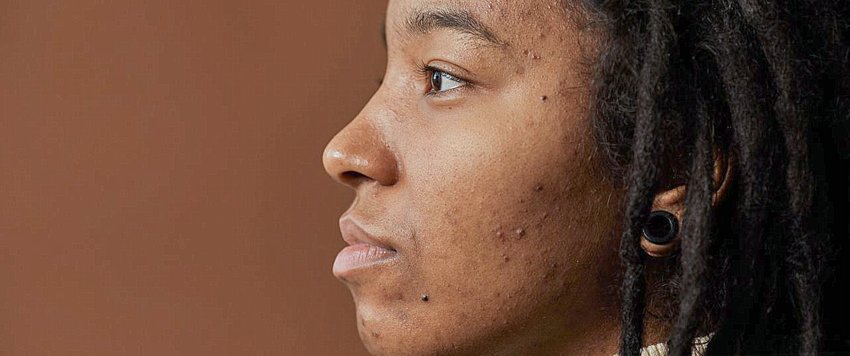
What acne can do to confidence, what employers should understand, and how to walk into an interview without putting your life on hold
The short answer: acne can affect how a person feels at an interview — but it should not define whether they are employable.
If you have acne and you are worried that an interviewer will look at your skin and decide you are not right for the job, you are not imagining the emotional weight of that fear. Acne can affect confidence, self-consciousness and the way a person experiences social and professional situations.
A 2025 systematic review of 101 studies found that acne can have meaningful effects on quality of life and psychosocial wellbeing, particularly in emotional and psychological domains. But there is an important distinction: feeling judged is not the same as proving that an employer rejected you because of acne.
That distinction matters. Your qualifications, experience, communication, attitude, preparation and ability to do the job are the things an interview is supposed to uncover. A spot, scar or period of inflammation is a skin condition — not a résumé
“You are in control — not the spots on your face.”
My experience: I have interviewed with acne too
I am not writing this from a distance. I lived with acne for about 15 years, and I have attended interviews while I had acne on my face. I knew I was suited for the jobs I applied for. I prepared, dressed appropriately, answered the questions as well as I could and reminded myself that my skin was not the whole of me.
I also used makeup when I wanted to cover blemishes and look more put together. That was my choice — not a condition of my worth. The more important work was internal: I had to know myself well enough not to let my skin dictate how I performed.
In consultations, clients have told me that they went to interviews prepared, spoke well and dressed well, but still had that nagging thought: “What if they think my skin makes me less attractive for the job?” Sometimes that fear may be unfounded. Sometimes a person simply cannot know what an interviewer is thinking. Either way, allowing that uncertainty to control your performance gives acne more power than it deserves.
Acne is not just carried on the face — it can be carried in the mind
One of the things I have observed repeatedly is that visible improvement in acne can bring visible improvement in confidence. As breakouts reduce, oiliness becomes more manageable, bumpy skin calms and post-acne marks begin to fade, clients often become calmer and more comfortable in their appearance. Some even find themselves reaching for less heavy makeup.
That emotional improvement is real. Research also supports the broader point that acne can affect psychosocial wellbeing. But I do not want anyone to misunderstand my message: confidence should not have to wait until the acne disappears.
Treat your skin, yes. Seek appropriate professional help when you need it, yes. But continue living, working, interviewing, dating, studying and pursuing your goals while your skin is improving.
Can acne influence a first impression?
Yes, appearance can influence human judgment, and it would be unrealistic to pretend that every interviewer is perfectly free from unconscious impressions. However, there is a big difference between acknowledging that humans notice appearance and accepting appearance as a legitimate measure of someone’s professional ability.
There is also a limitation worth stating clearly: evidence showing that acne affects psychosocial wellbeing is much stronger than evidence proving that acne itself routinely determines hiring outcomes. So if you are rejected after an interview, do not automatically conclude that your skin was the reason. You may never know the real reason, and there are usually many candidates and many variables involved.
My opinion is simple: an interviewer should concentrate on performance, communication, attitude, experience and qualifications. If an applicant is qualified and capable, a temporary or treatable skin condition should not be allowed to overshadow the person’s actual ability.
What about beauty, media, hospitality, sales and customer-facing jobs?
People may feel especially self-conscious in industries where appearance receives more attention — beauty and skincare, modelling, television and media, hospitality, sales, customer service and other highly visible roles. Some of these industries have strong appearance cultures, and that can make someone with acne feel as though they are starting at a disadvantage.
But professional presentation and flawless skin are not the same thing. A person can be polished, well groomed, articulate, warm, competent and excellent at their job while having acne.
If you choose to use makeup or concealer, use it because it makes you feel comfortable and put together — not because acne makes you unprofessional. Men can use complexion products too if they want to. And if you do not want to conceal your acne, that does not make you less employable.
A real-world client pattern: confidence improves as the skin improves
A recurring client experience I see is not one dramatic overnight transformation. It is a gradual shift. A client arrives worried about recurring breakouts, oily skin, bumps and dark marks. As the routine becomes consistent and the skin starts responding, the person often becomes more relaxed about their appearance.
This is not presented as a single named case study; it is a pattern I have observed across client consultations. The lesson is important: visible improvement can strengthen confidence, but the confidence-building process should begin before the skin is perfect.
Interview week: what I would tell someone with acne
1. Prepare for the interview. Gather your documents, research the company, rehearse likely questions and know what you bring to the role.
2. Dress appropriately. Put your best foot forward. Dress neatly and attractively, while respecting the culture and practical requirements of the organisation.
3. Breathe. Slow breathing before the interview and between responses can help you avoid rushing your words when anxiety rises.
4. Keep your skincare routine stable. Do not panic and suddenly introduce five new products because an interview is approaching. Consistency is usually wiser than last-minute experimentation.
5. Be careful with last-minute facials. If you know an important interview is coming, avoid aggressive treatments that could irritate your skin. If you want a professional facial, plan it early enough to know how your skin responds.
6. Conceal only if you want to. Light makeup or concealer can be an option for discoloration or blemishes, but it is not a requirement for professionalism.
7. Lead with your strengths. Your credentials, preparation, personality, communication and ability to do the job are your selling points.
The anxiety trap: don’t punish your skin because you are worried
One of the biggest mistakes I see when people become anxious about their skin is that they start doing more: squeezing pimples, picking and pinching, over-washing, trying several products at once, using harsh facials or attempting aggressive brightening or bleaching.
Anxiety can make an illogical action feel urgent: “If I do this harder, maybe the acne will disappear faster.” Unfortunately, that can backfire. The NHS advises against repeatedly washing acne-prone skin and against squeezing spots, because irritation and picking can worsen acne and increase the risk of scarring. It also recommends non-comedogenic, water-based products where appropriate. Acne treatments often take weeks to months to show their full effect, so consistency matters.
My advice is: if you already have a routine that is working for you, do not abandon it simply because you are anxious about an upcoming interview. If your acne is moderate, severe, painful, scarring or making you very distressed, speak with a qualified healthcare professional rather than escalating your skincare on your own.
What I would say to employers and interviewers
Please remember what the interview is for. It is an opportunity to determine whether the candidate can perform the role. Visible acne, scars or pigmentation may be noticeable, but noticing something is not the same as measuring competence.
Use structured questions, assess candidates against the requirements of the role and avoid irrelevant questions about a person’s skin. In the UK, Acas guidance states that employers must follow discrimination law during recruitment and that questions must not discriminate. For disability-related questions, there are restrictions on when employers can ask about health or disability, subject to specific exceptions.
The Equality Act 2010 protects disabled people from discrimination in employment in Great Britain. The Act’s supplementary provisions state that severe disfigurement is treated as having a substantial adverse effect for the disability definition, although the long-term requirement still matters. That does not mean every case of acne automatically qualifies as a disability. Whether a particular skin condition meets the legal definition is fact-specific.
So if you are writing or reading this from outside England, Scotland or Wales, do not assume the UK rules apply to you. Employment and disability laws vary by country.
Should employers ask an applicant about their acne?
In my view, an interviewer should not ask an applicant why they have acne, how long they have had it, or what happened to their face unless there is a genuine, legally relevant reason connected to the recruitment process. It is unnecessary, potentially humiliating and unrelated to most job requirements.
If an applicant has a disability and needs a reasonable adjustment to participate in the recruitment process, that is a different matter. Employers should focus on what adjustment is needed, not on making the person justify their appearance.
Do not put your life on hold until your skin clears
“You are in control — not the spots on your face.”
I lived with acne for about 15 years, and one thing I learned is that you cannot always put a deadline on your skin and say, “By this date, my acne story will be over.” Healing is a process. Life, however, keeps moving.
If you are applying for a job while treating acne, you are doing two things at once: pursuing a better future and working toward healthier skin. Both require patience, consistency and resilience.
A job application is not a declaration that your life is perfect. It is a declaration that you are willing to move forward. If one door closes, learn what you can, improve where necessary and keep knocking on doors.
The two pursuits of happiness
I think of looking for a job and treating acne as two pursuits of happiness. You are trying to build a life you feel good about, and you are trying to feel better about your skin. Neither pursuit should be abandoned simply because progress is not immediate.
Believe in yourself the same way you believe that consistent skincare can eventually change your skin. Continue treating your acne. Continue applying for jobs. Continue improving your skills. And breathe through both processes because both can be unnerving.
“You are in control — not the spots on your face.”
Three things I want you to remember
- Do not put your career on hold because of acne. Your skin is changing; your opportunities should not have to stop.
- Prepare for the interview and protect your skin barrier instead of reacting to anxiety with aggressive, last-minute skincare.
- Your acne does not have you. You are in control of how you prepare, how you present yourself, how you pursue treatment and how you keep moving forward.
“You’ve got this. Your credentials and your presentation are your selling points — not the acne on your face.”
A final word from me
If you are sitting at home thinking, “Maybe I should wait until my skin gets better before I apply,” I want you to hear this clearly: do not wait for perfect skin to start living your life.
Walk into that interview prepared. Dress appropriately. Breathe. Smile. Speak calmly. Let your personality, articulation, experience and preparation be bigger and brighter than the blemishes on your face.
Your skin is one part of you. It is not your qualification, your intelligence, your work ethic, your resilience or your future.
Medical and legal note
This article is educational and reflects the author’s professional experience and opinions. It is not a substitute for individualized medical advice, diagnosis or treatment. If acne is severe, painful, scarring, persistent despite treatment, or causing significant distress, seek advice from a qualified healthcare professional. The legal information above is UK-focused and general; it is not legal advice.
Relevant links & further reading
- NHS: Acne — treatment
- NHS: Acne — causes and myths
- NHS: Acne overview and self-care
- British Association of Dermatologists: Acne guidance
- PubMed: Systematic review of acne’s psychosocial burden
- Acas: Following discrimination law in recruitment
- Acas: Interviewing job applicants
- GOV.UK: Disability rights — employment
- Equality Act 2010 — legislation
- Equality and Human Rights Commission: Protected characteristics